Interlace Communications

Category: AI Resource Hub

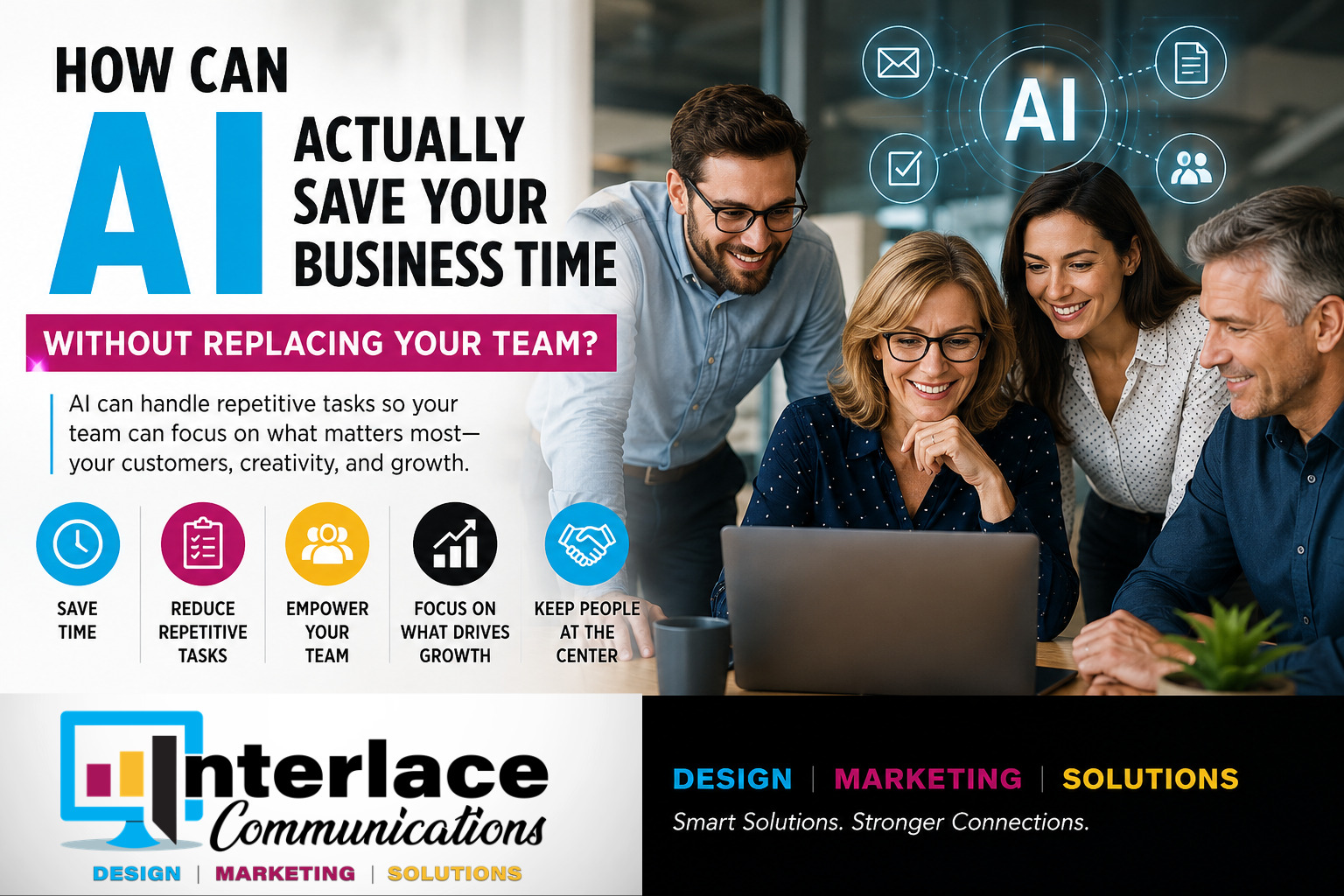
  • How Can AI Actually Save My Business Time Without Replacing My Team?

    How Can AI Actually Save My Business Time Without Replacing My Team?

    Quick Answer

    Yes—AI can save your business time without replacing your team. When used thoughtfully, AI handles repetitive tasks like drafting emails, organizing information, creating first drafts of blogs, and summarizing meetings, giving your employees more time to focus on customers, creativity, problem-solving, and the work that truly drives your business forward. The goal isn’t to replace people. It’s to help people do their best work.

    AI Isn’t Replacing Your Team. It’s Giving Them Time Back.

    One of the most common questions we hear at Interlace Communications is:

    “We’re interested in AI, but we don’t want to replace our employees.”

    It’s a fair concern.

    Every day, we’re surrounded by headlines predicting that artificial intelligence will eliminate jobs, replace entire departments, or completely change the workplace overnight. It’s enough to make any business owner wonder whether they should embrace AI — or avoid it altogether.

    After working with businesses for more than 50 years, we’ve learned something that hasn’t changed, no matter how much technology evolves.

    Businesses succeed because of people.

    Relationships matter.

    Experience matters.

    Creativity matters.

    Trust matters.

    AI doesn’t replace those things. Instead, it helps remove some of the repetitive work that often keeps talented people from doing what they do best.

    That’s why we don’t think of AI as a replacement for employees.

    We think of it as another tool in the toolbox.

    Just like email didn’t replace conversations, calculators didn’t replace accountants, and websites didn’t replace customer service, AI isn’t here to replace your team. It’s here to make their work more efficient.

    Why Are So Many Business Owners Hesitant About AI?

    Most business owners aren’t afraid of technology. They’re afraid of making the wrong decision.

    Some worry they’ll invest in the wrong tools. Others worry their employees will resist the change. Many simply don’t know where to begin. Those concerns are completely understandable.

    The truth is, AI has developed incredibly fast. New tools seem to appear every week, and every headline promises the next revolutionary breakthrough.

    It can feel overwhelming.

    But here’s something we tell clients all the time:

    You don’t need to know everything about AI to benefit from it.

    You simply need to understand where it fits into your business.

    Where Does AI Actually Save Time?

    Most people imagine AI doing huge, complicated jobs. In reality, the biggest time savings usually come from the small tasks that quietly consume hours every week.

    Think about your own day.

    How much time do you spend:

    • Writing emails?
    • Creating social media posts?
    • Taking meeting notes?
    • Searching for information?
    • Summarizing long documents?
    • Brainstorming ideas?
    • Creating first drafts?
    • Organizing project information?

    Individually, these tasks may only take a few minutes.

    Together, they can consume several hours every single week.

    That’s where AI shines.

    Instead of starting from a blank page, AI helps you start with a draft.

    Instead of spending an hour organizing notes, it can summarize them in seconds.

    Instead of staring at an empty screen trying to think of marketing ideas, it can generate dozens of possibilities you can build upon.

    The important word here is build.

    AI creates the starting point.

    People provide the experience, judgment, and final decisions.

    Think Less About Jobs—And More About Tasks

    One of the biggest misconceptions surrounding AI is that it replaces jobs.

    That’s not how we approach it.

    Instead, we encourage business owners to think about tasks rather than job titles.

    For example, imagine someone on your team who spends part of every week:

    • Answering routine emails
    • Creating meeting summaries
    • Drafting newsletters
    • Updating website content
    • Writing social media posts
    • Organizing client information

    Those repetitive tasks are perfect opportunities for AI assistance.

    Now think about everything else that employee does.

    • Building relationships
    • Helping customers
    • Solving unexpected problems
    • Training coworkers
    • Making decisions
    • Showing empathy
    • Representing your company

    AI can’t replace those human qualities.

    In fact, by reducing repetitive work, AI often allows employees to spend more time doing the work only people can do.

    We Like to Think of AI as the World’s Fastest Intern

    When Alyse speaks to business owners and organizations, she often uses a simple comparison.

    Imagine hiring an intern. They’re eager to help. They’re incredibly fast. They never complain. They’re available almost anytime.

    But they also have one important limitation. They only know what you tell them.

    Give an intern vague instructions, and you’ll probably receive disappointing results. Provide clear direction, examples, and context, and suddenly that intern becomes an incredible asset to your business.

    AI works much the same way.

    It doesn’t replace your experience. It learns from your instructions. The better your prompts, the better your results.

    That’s why learning how to communicate with AI is often more valuable than simply learning another piece of software.

    The Businesses Seeing the Greatest Success Aren’t Replacing Employees

    They’re removing unnecessary work.

    They’re allowing their teams to spend less time formatting documents and more time serving customers.

    They’re reducing hours spent on repetitive administrative work.

    They’re improving communication.

    They’re organizing information more effectively.

    Most importantly, they’re creating room for people to focus on work that requires creativity, judgment, leadership, and genuine human connection.

    That’s where the real value of AI begins.

    What Happens When Businesses Wait Too Long?

    One of the biggest risks today isn’t using AI incorrectly.

    It’s not using it at all.

    We’ve watched technology evolve for decades. Businesses that adapted to websites, email marketing, search engines, and social media often found new opportunities while others struggled to catch up. Artificial intelligence is following a similar path.

    That doesn’t mean you need to rush out and buy every AI tool on the market. It does mean now is the time to start learning, experimenting, and understanding where AI can make a meaningful difference in your business.

    Even small improvements can add up. Saving just 30 minutes a day equals more than 120 hours over the course of a year. Imagine what your team could accomplish with that extra time.

    The Biggest Mistake We See Businesses Make

    The biggest mistake isn’t choosing the wrong AI platform.

    It’s expecting AI to solve business problems without having a clear process in place.

    AI can’t fix a broken workflow. It can’t replace poor communication. It can’t make up for unclear goals.

    What it can do is make good processes even better.

    For example, if your team already has a consistent way of responding to customer inquiries, AI can help draft those responses more quickly. If you already publish regular marketing content, AI can help brainstorm ideas, organize information, and create first drafts.

    Successful businesses don’t ask AI to run the business.

    They ask AI to help the business run more efficiently.

    Where Should Your Small Business Start?

    One of the questions we hear most often is, “Where do we even begin?”

    Our answer is surprisingly simple.

    Start small.

    Choose one repetitive task that takes more time than it should.

    That could be:

    • Writing follow-up emails
    • Summarizing meeting notes
    • Creating social media captions
    • Drafting blog outlines
    • Organizing project information
    • Creating job descriptions
    • Developing training materials

    Once your team becomes comfortable using AI for one task, you’ll naturally begin identifying other opportunities.

    Trying to transform your entire business overnight usually creates frustration.

    Building confidence one success at a time creates momentum.

    AI Works Best When People Stay in Control

    One thing we emphasize in every workshop and consulting session is that AI should support your decisions — not make them for you.

    Every piece of content should be reviewed.

    Every important communication should be checked.

    Every recommendation should be evaluated by someone who understands your customers and your business.

    Think of AI as your first draft—not your final answer.

    That’s where businesses find the greatest value.

    At Interlace Communications, We Believe AI Should Feel Approachable

    Artificial intelligence doesn’t have to be intimidating.

    It doesn’t require learning complicated programming languages or becoming a technology expert.

    It starts with understanding your business.

    Before we recommend a single AI tool, we spend time learning how your organization operates, where your team spends the most time, and what challenges you’re trying to solve.

    Sometimes the answer isn’t AI at all.

    Sometimes it’s improving your website, automating a marketing process, creating better documentation, or simplifying communication.

    Other times, AI becomes the missing piece that helps everything work together more efficiently.

    Our goal has never been to sell technology.

    Our goal is to help businesses use technology with confidence.

    Small Shifts Lead to Real Results

    The businesses seeing the greatest success with AI aren’t replacing employees or reinventing everything they do.

    They’re making thoughtful improvements.

    They’re giving employees better tools.

    They’re removing repetitive work.

    They’re creating more time for innovation, customer service, relationship building, and strategic thinking.

    Those are the things that continue to set great businesses apart.

    Technology will continue to evolve.

    The businesses that thrive will be the ones that learn to evolve with it while keeping people at the center of everything they do.

    Let’s Talk About What’s Possible

    Have you been wondering whether AI could help your business—but weren’t sure where to begin—we’d love to have that conversation.

    Whether you’re exploring AI for the first time, looking to improve your marketing, streamline everyday tasks, strengthen your website, or create a long-term strategy, we’re here to help you take practical next steps that make sense for your business.

    Artificial intelligence doesn’t have to replace your team.

    It can become one of the most valuable tools your team has.

    Let’s talk about what’s possible.

    Frequently Asked Questions

    Will AI replace my employees?

    Not when it’s implemented thoughtfully. Most businesses use AI to automate repetitive tasks so employees can spend more time serving customers, solving problems, and growing the business.

    What types of businesses can benefit from AI?

    Nearly every organization can benefit, including manufacturers, professional offices, nonprofits, retailers, contractors, healthcare providers, educational organizations, and service businesses. The key is finding the right applications for your specific goals.

    Do I need technical experience to start using AI?

    No. Many AI tools are designed for everyday business users. The biggest challenge isn’t learning the technology—it’s learning how to ask good questions and apply AI responsibly.

    Is AI safe to use for business?

    It can be, provided it’s used with clear policies and an understanding of privacy, security, and responsible practices. That’s why we encourage businesses to establish guidelines before using AI with sensitive information.

    How do I know where AI could help my business?

    Start by looking for repetitive tasks that consume time every week. Those activities often provide the quickest return on investment and help your team become comfortable using AI before expanding into larger projects.

    Why work with Interlace Communications instead of figuring it out ourselves?

    You certainly can explore AI on your own. What we provide is experience, strategy, and practical guidance. We help businesses avoid common mistakes, identify meaningful opportunities, and implement AI in ways that support their employees, strengthen their marketing, and align with their long-term goals.

  • Why Aren’t More Small Businesses Using AI Yet?

    Why Aren’t More Small Businesses Using AI Yet?

    Quick Answer

    Most small businesses are not avoiding AI because they dislike technology. They’re avoiding it because they are busy, uncertain, and often overwhelmed by the amount of information available. The good news is that AI doesn’t require a computer science degree or a complete business overhaul. Small businesses can start with simple, practical uses that save time and improve productivity.

    The Question I Hear Everywhere

    Over the past year, I’ve spoken with business owners throughout Berks County, Schuylkill County, and beyond about artificial intelligence.

    Some are excited, some are curious, but many are cautious.

    And a surprising number tell me the same thing.

    “I know I should be looking at AI, but I don’t know where to start.”

    That response isn’t unusual.

    In fact, it may be the biggest reason many small businesses haven’t embraced AI yet.

    It’s not resistance.

    It’s uncertainty.

    Is AI Really That Complicated?

    The media often makes AI sound incredibly complicated.

    Business owners hear terms like:

    • Large Language Models
    • Machine Learning
    • Neural Networks
    • Agents
    • Automation

    Before long, many conclude that AI is something only large corporations can afford to understand.

    The reality is much simpler.

    Many business owners are already using AI without realizing it.

    Email filters, navigation apps, recommendation engines, and voice assistants all rely on AI.

    The challenge is understanding how AI can help your specific business.

    Are Business Owners Afraid AI Will Replace Employees?

    This concern comes up frequently.

    Many people worry that AI will eliminate jobs.

    What we’ve seen instead is that AI often helps people perform their jobs more efficiently.

    Think about the tasks that consume hours each week:

    • Drafting emails
    • Writing social media posts
    • Creating blog outlines
    • Researching topics
    • Summarizing meetings
    • Organizing information

    AI can assist with these tasks, allowing employees to focus on work that requires creativity, judgment, and personal interaction.

    The goal is helping people work smarter.

    The Biggest Barrier Isn’t Technology

    It’s time.

    Small business owners wear multiple hats every day.

    They’re managing employees, serving customers, handling paperwork, following up on leads, and putting out fires.

    Learning a new technology often falls to the bottom of the list.

    That’s why many businesses delay exploring AI.

    Not because they don’t see value.

    Because they don’t feel they have time.

    What Can AI Actually Help a Small Business Do?

    This is where the conversation gets interesting.

    AI can help businesses:

    Create Marketing Content

    Generate blog ideas, social media posts, email newsletters, and promotional materials.

    Improve Customer Communication

    Draft responses, organize customer inquiries, and create helpful resources.

    Streamline Operations

    Document processes, summarize meetings, and organize internal knowledge.

    Support Research

    Gather information faster and identify trends affecting the business.

    Improve Productivity

    Reduce time spent on repetitive tasks.

    Notice something important.

    None of these require replacing employees.

    They simply help businesses work more efficiently.

    What Happens When Businesses Wait Too Long?

    The businesses that concern me most aren’t the ones experimenting with AI.

    They’re the ones ignoring it completely.

    Every major technology shift creates opportunities.

    The internet did.

    Email did.

    Social media did.

    Mobile devices did.

    AI is no different.

    Businesses that begin learning now will have an advantage over those who postpone the conversation indefinitely.

    That doesn’t mean rushing into every new tool.

    It means becoming informed.

    Starting Small Is Often the Best Approach

    One of the biggest misconceptions about AI is that implementation must be massive.

    It doesn’t.

    A simple starting point might include:

    ✓ Using AI to brainstorm blog topics

    ✓ Drafting email newsletters

    ✓ Creating social media content

    ✓ Summarizing meeting notes

    ✓ Developing FAQs for customers

    Small wins build confidence.

    Confidence creates momentum.

    Momentum creates results.

    What We’ve Learned Working With Businesses

    At Interlace Communications, we’ve found that most business owners don’t need more technology.

    They need practical guidance.

    They need someone to translate AI into plain English.

    They need examples that relate to their business.

    Most importantly, they need to understand that AI is a tool, not a replacement for human expertise.

    The businesses finding success with AI are using it to enhance what they already do well.

    The Real Question Isn’t Whether AI Is Coming

    It’s already here.

    The real question is whether your business will learn how to use it effectively.

    You don’t need to become an AI expert overnight.

    You don’t need to transform your entire operation tomorrow.

    You simply need to take the first step.

    The businesses that begin learning today will be better prepared for the opportunities ahead.

    Let’s Talk About What’s Possible

    Should you be curious about AI, but unsure where to begin, you’re not alone.

    We work with business owners throughout Pennsylvania and beyond who are asking the same questions.

    Our goal isn’t to overwhelm you with technology.

    Our goal is to help you discover practical ways AI can support your business, save time, and create new opportunities for growth.

    The first conversation is often the most important one.

    Let’s talk about what’s possible.

    Frequently Asked Questions

    Do I need technical experience to use AI?

    No. Many AI tools are designed for everyday business users.

    Is AI expensive?

    Some tools are free, while others have affordable monthly subscriptions.

    Will AI replace my employees?

    Most businesses use AI to support employees, not replace them.

    What’s the easiest way to start using AI?

    Begin with content creation, brainstorming, or administrative tasks.

    Is AI safe for business use?

    It can be, when used thoughtfully and with proper policies in place.

    How can Interlace Communications help?

    We provide practical guidance, training, consulting, and implementation support tailored to small businesses.

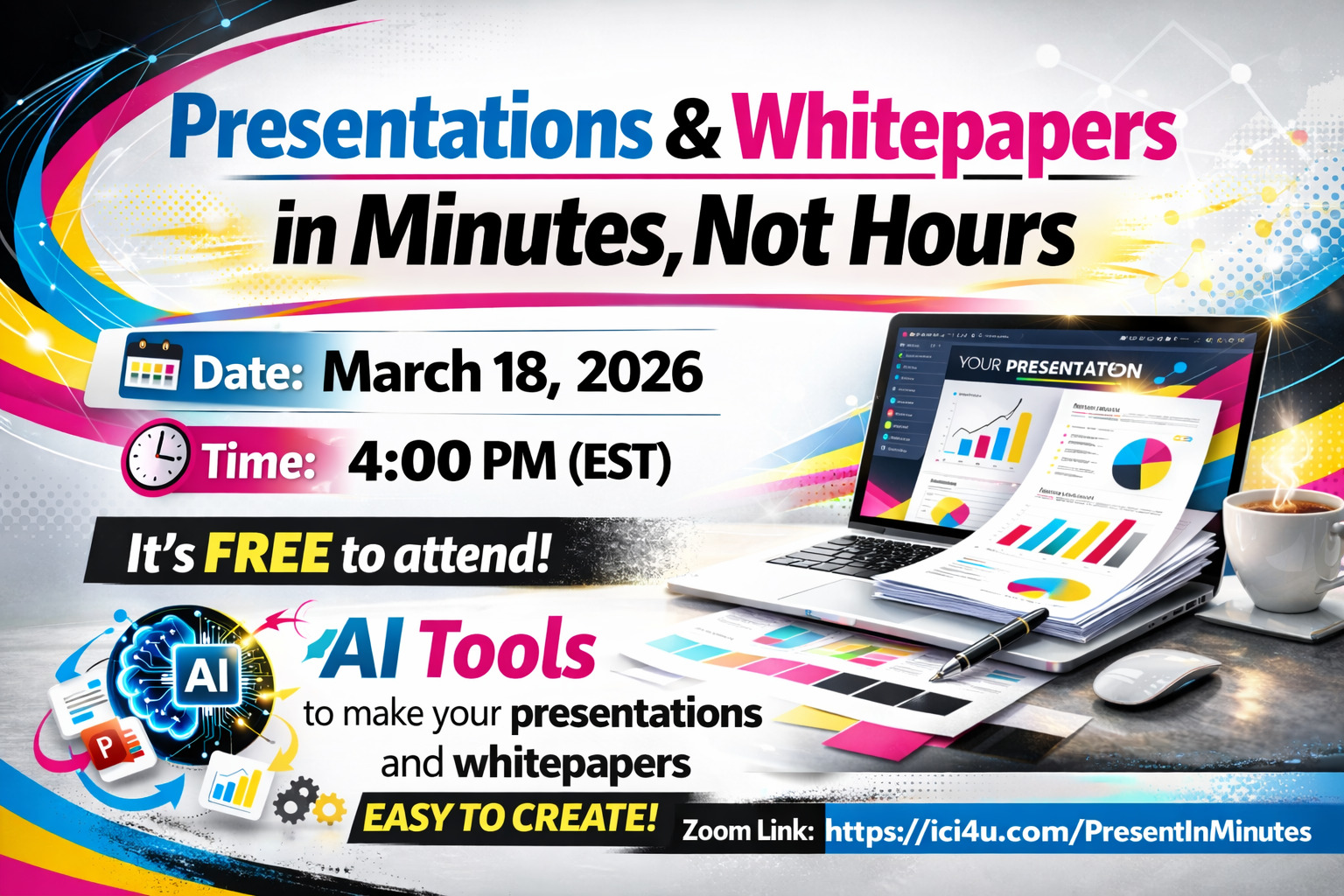
  • AI Presentations for Business Owners: Presentations in Minutes, Not Hours

    AI Presentations for Business Owners: Presentations in Minutes, Not Hours

    How many times have you opened PowerPoint… stared at a blank slide… and thought: Why is this taking so long?

    You adjust a headline. Move a box. Resize a graphic. Rewrite the first slide again.

    Suddenly it’s 11:47 PM and you haven’t even practiced yet.

    You’re not bad at presentations. You’re overloaded.

    AI presentations help business owners create slides faster by eliminating blank-slide friction, structuring ideas instantly, and reducing repetitive formatting decisions. Instead of spending 2–4 hours building a deck manually, AI tools generate organized content in minutes so leaders can focus on clarity, confidence, and impact.

    The Real Problem Isn’t PowerPoint

    Most people assume the issue is skill. It’s not. It’s cognitive overload.

    Every slide forces dozens of micro-decisions:

    • What goes first?
    • Is this too much text?
    • Does this flow logically?
    • Why doesn’t this look right?

    You’re designing while thinking and that drains energy fast.

    McKinsey reports knowledge workers spend nearly 20 percent of their week searching for and organizing information. Microsoft’s Work Trend Index (2023–2024 Reports on Digital Overload and Productivity) highlights rising digital overload and constant context switching. Task switching quietly erodes productivity. Now add a 20-slide deck after a full day of meetings.

    Of course it takes hours. Of course it feels heavy.

    Here’s the part most leaders underestimate: When your thinking is overloaded, your message weakens. Your audience feels it. Decisions slow down. Momentum stalls.

    AI presentations aren’t about prettier slides. They’re about clearer thinking.

    What’s Really Slowing You Down

    It’s rarely your creativity. It’s friction inside the workflow:

    • Starting from a blank slide with no structure
    • Editing content while designing layout
    • Rewriting because the flow isn’t clear
    • Fixing formatting inconsistencies late
    • Trying to polish everything under pressure

    This isn’t a talent issue. It’s a process issue. And the process can be redesigned.

    Traditional vs AI-Driven Presentation Workflow

    Traditional Process AI-Driven Process Impact
    Blank slide start Structured outline in minutes Immediate clarity
    Manual drafting Organized content generated fast Fewer decisions, less fatigue
    Slide-by-slide formatting Consistent layout applied instantly No late-night cleanup
    Endless tweaking Strategic refinement Stronger delivery
    2–4 hours per deck First draft in under 30 minutes Time back in your week

    One recent attendee rebuilt a board presentation in 28 minutes using this system.
    Previously it took her nearly three hours.

    That’s not magic. That’s the structure. This isn’t about replacing you.

    It’s about removing friction so your thinking gets sharper and your time stays yours.

    A Strategic Insight from Interlace Communications

    “Most presentations stall because leaders try to solve structure and design at the same time,” says Alyse Mitten, founder of Interlace Communications.
    “When AI handles structure, you free mental space for strategy. Clarity isn’t just better slides. It leads to faster buy-in, stronger decisions, and trust in the room.”

    Not flashy tools.

    Not complicated software.

    A smarter system for how you already work.

    Introducing the Workshop: Presentations in Minutes, Not Hours

    📅 March 18, 2026
    🕓 4:00 PM EST
    💻 Live Zoom AI Training Workshop
    🔗 https://ici4u.com/PresentInMinutes

    This workshop is built for business owners, nonprofit leaders, and managers who are tired of finishing slide decks at night.

    It’s not a design tutorial. It’s a practical system for presentation productivity.

    You’ll learn how to:

    • Create presentations faster using AI tools
    • Separate thinking from formatting
    • Reduce decision fatigue
    • Build repeatable presentation workflows

    Every session includes AI tools. Some developed by the Interlace team. Others from trusted developers. All designed for real-world implementation.

    Not theory. Application you can use the very next day.

    💵 Cost: $27
    ⭐ MAP Clients attend FREE

    Frequently Asked Questions

    Is this for beginners?
    Yes. If you use PowerPoint, Google Slides, or similar tools, you’re ready. No advanced AI knowledge required.

    Will this replace my software?
    No. This enhances your existing workflow. It’s about time savings, clarity, and structure.

    Is this relevant for board meetings or fundraising presentations?
    Absolutely. Clear structure improves persuasion, confidence, and message flow.

    Is the training live?
    Yes. March 18 at 4:00 PM EST via Zoom.

    What if I want deeper implementation support?
    Interlace Communications offers done-with-you and done-for-you AI workflow design through its MAP program for teams that want this embedded into daily operations.

    The Real Cost of Doing Nothing

    Another late night before a big meeting.

    Another deck that feels rushed.

    Another presentation where your message almost landed… but didn’t fully move the room.

    Lost time.
    Lost clarity.
    Lost momentum.

    Time is expensive.

    Clarity drives decisions.

    And confident delivery builds trust faster than any graphic ever could.

    For $27, the return on your reclaimed hours makes this workshop an easy decision.

    For MAP Clients, it’s already included.

    Ready to Stop Losing Hours to Slide Decks?

    Join us for Presentations in Minutes, Not Hours

    📅 March 18, 2026
    🕓 4:00 PM EST
    🔗 https://ici4u.com/PresentInMinutes

    Secure your seat.

    And should you decide you’d rather not engineer this system alone, Interlace Communications can help you implement AI presentations and workflow systems directly into your business.

    Because your time shouldn’t disappear inside slide decks.

    It should be spent leading.

  • Are Your Blogs Quietly Determining Whether AI Recommends Your Business in 2026?

    Are Your Blogs Quietly Determining Whether AI Recommends Your Business in 2026?

    Many business owners believe their website exists to describe what they do.

    Services page.
    About page.
    Maybe a few photos.

    And somewhere on the site — a blog.

    The blog often feels optional. Something useful for SEO, something nice to have when time allows, but not essential to day-to-day operations.

    That assumption used to be harmless. In 2026, it isn’t.

    Today, potential customers often don’t start by visiting websites at all. They start by asking a question into Google, Siri, or an AI search tool:

    • “Who fixes foundation cracks near me?”
    • “What does a business liability policy actually cover?”
    • “Do I need a medical billing service for a new practice?”

    Instead of showing ten blue links, modern search systems increasingly provide direct answers — and within those answers, they choose which businesses to reference, recommend, or lead a user toward contacting.

    Those recommendations do not come from advertisements. They come from content.

    In 2026, blogs are no longer simply marketing content. They act as discovery signals that help search engines and AI systems understand what a business actually knows and when it should be recommended. Clear, structured blog articles allow search systems to connect specific customer problems with the businesses best suited to solve them.

    Why This Change Matters More Than It Appears

    Search behavior has shifted from keywords to questions. Years ago, a homeowner might search “roof repair cost.” Now they ask: “Why is water dripping from my ceiling after snow melts?”

    AI-assisted search tools look for content that directly explains real situations. They are not trying to rank websites. They are trying to choose trustworthy explanations.

    This is where many businesses unknowingly create a problem for themselves.

    A typical service page says what you do. A blog article shows what you understand.

    AI systems can interpret explanations far more easily than promotional descriptions. If your website only lists services, search engines know you exist. If your website consistently explains real customer problems, search engines understand when you should be discovered.

    That difference directly affects who gets recommended.

    What do Blogs Signal to Search Systems?

    When a business publishes useful articles, it creates recognizable patterns:

    • The types of problems it solves
    • The situations customers encounter
    • The level of expertise demonstrated
    • The clarity of communication

    AI systems do not “decide” who is credible. They evaluate who consistently explains things well. A business that regularly answers real questions becomes easier for search systems to match with real searches. A business that rarely publishes helpful content becomes harder to interpret.

    Visibility is no longer driven only by rankings. It is influenced by understanding.

    As Alyse Mitten, President of Interlace Communications explains:

    “Blogging is no longer about filling space on a website. It helps search engines and AI systems recognize what you actually do and when your business should be recommended.”

    Passive Websites vs. Interpretable Websites

    Passive Website Interpretable Website
    Describes services Explains customer situations
    Static pages Ongoing education
    Limited discovery Expanded search visibility
    Harder for AI to reference Easier for AI to recommend

    Search engines evaluate relevance, AI evaluates clarity, and customers evaluate trust. Blog content is one of the few assets that influences all three simultaneously.

    Common Blogging Habits That Limit Results

    Many businesses post blogs consistently and still see little impact. The issue is rarely because of effort — it is the approach.

    Typical patterns include:

    • Writing posts without a specific customer question in mind
    • Repeating general industry advice found everywhere online
    • Focusing on word count instead of usefulness
    • Publishing content once and never using it again

    Blogging works best when each article performs a clear function: answering a real question a real customer would ask before contacting you.

    FAQs

    Do Smaller Businesses Benefit?

    Yes — often more than large companies.

    Large organizations rely heavily on advertising. Smaller businesses rely on being discovered at the moment a person needs help. Clear content gives search engines and AI systems confidence connecting those moments to your business.

    How Often Should You Publish?

    Consistency matters more than frequency. A predictable schedule signals reliability to search systems. Sporadic bursts followed by long silence provide little interpretive value.

    Turning a Blog into a Business Asset

    Once businesses understand this shift, the next challenge becomes practical:

    • What should you write about?
    • How long should articles be?
    • How do you choose topics customers actually search?
    • How do you structure an article so search engines and AI can interpret it correctly?

    To address those questions, Interlace Communications is hosting a workshop:

    Blogs That Bring You Business
    February 18, 2026, 4:00 PM EST
    Register Online

    Cost: $27 (MAP clients attend free)

    The session focuses on topic selection, article structure, and how modern search systems interpret business content.

    Because today a blog is often the mechanism that determines whether your business is discovered — or your competitor’s is.

  • Why Does AI Feel So Overwhelming—and What Actually Makes It Useful for Small Businesses?

    Have you ever opened an article about AI, skimmed a few paragraphs, and closed the tab feeling more confused than when you started?

    That reaction is more common than most people admit—and it has nothing to do with intelligence, capability, or being “late to the game.”

    For many small and mid-sized business owners, AI doesn’t feel exciting. It feels noisy. Rushed. Slightly intimidating. The message often sounds like everyone else already understands it and you somehow missed the meeting where it was explained.

    Here’s the truth most conversations skip over: The problem isn’t AI. It’s the way AI has been introduced.

    AI feels overwhelming because small business owners are flooded with tools, advice, and pressure without context. What makes AI useful is clarity. When AI is introduced one purpose at a time, aligned with real workflows and supported by guidance, it becomes a practical business tool instead of a source of stress.

    Why AI Feels Overwhelming in the First Place

    Most businesses aren’t avoiding AI because they’re overwhelmed by fear of technology. They’re overwhelmed because the AI conversation has been built on urgency instead of understanding. Instead of being shown how AI fits into their day-to-day work, they’re told what they should already know.

    Usually it sounds like this: you’re told there are dozens of tools you need to try. You’re warned that not using AI means you’re falling behind. You hear big promises about automation, productivity, and growth—without any explanation of how this connects to your actual workload.

    Underneath all that noise is a quieter concern that rarely gets addressed: What happens if you choose the wrong tool? What if you invest time or money and don’t see results? What if you don’t use it “correctly” and feel foolish for even trying?

    That pause isn’t resistance. It’s discernment. And discernment is exactly what strong decision-makers rely on.

    What Actually Makes AI Useful for Small Businesses

    AI becomes useful when the noise stops.

    Not when you add another platform. Not when you chase the newest feature. But when the conversation slows down enough to ask one practical question: What do we actually need help with right now?

    That’s where practical AI for small business begins.

    Used thoughtfully, AI supports thinking instead of replacing it. It helps draft content, organize ideas, summarize information, outline plans, and reduce friction in everyday tasks. The value isn’t about doing more—it’s about making necessary work feel lighter and more manageable.

    Clarity, not urgency, is what allows AI to become useful.

    Three Reasons AI Feels Overwhelming (and What Fixes Them)

    1. Trying to learn everything at once
      AI works best when it’s applied to one clear task at a time.
    2. Collecting tools without a strategy
      One well-chosen AI tool used consistently delivers more value than juggling multiple platforms.
    3. Skipping guidance
      Clear goals and real-world examples matter far more than technical knowledge.

    This is where AI consulting services add real value—not by introducing complexity, but by removing it.

    AI Myths vs. Reality for Small Businesses

    What Creates Overwhelm What Actually Works
    You need to learn everything immediately You start with one practical use
    AI replaces people AI supports people
    More tools equal better results Simplicity produces better outcomes
    You need technical skills You need clarity and direction

    A Calm Guide in a Noisy Space

    Helping businesses adapt to change is not new for Interlace Communications. For decades, we’ve guided clients through major shifts—from print to digital, from websites to social media, and now to AI for business.

    Each transition has reinforced the same lesson: People don’t need hype. They need context.

    As Alyse Mitten, President and Founder of Interlace Communications, explains:

    “Confidence with AI doesn’t come from trying everything. It comes from choosing one tool, understanding why you’re using it, and applying it consistently. When people have clarity, the technology finally starts to feel useful.”

    That philosophy shapes how we approach AI workshops for business owners—one topic at a time, one tool at a time, always grounded in how real teams actually work.

    Why Workshops Matter More Than Tutorials

    Most AI content online falls into one of two extremes. It’s either too broad to be useful or too technical to feel approachable.

    A hands-on AI workshop creates something different. It creates space to ask questions, see real examples, and understand not just what a tool does—but why it matters for your business.

    Our AI Without the Overwhelm workshop is designed for leaders who want clarity and direction, not another trend to keep up with. The session focuses on practical understanding and a clear next step. Our workshop also includes the option to schedule a 30-minute follow-up session. That’s where insight turns into application and decisions turn into action.

    Frequently Asked Questions

    Is AI only useful for marketing?
    No. While using AI in marketing is common, many businesses start with writing, planning, and internal organization.

    Do I need experience with AI before attending a workshop?
    No experience is required. These workshops are built specifically for beginners and cautious adopters.

    Will AI change how my team works?
    AI should support your team, not disrupt it. The goal is smoother workflows—not replacement.

    Is this about tools or strategy?
    Strategy comes first. Tools are selected only after goals are clear.

    Your Next Step

    You don’t need to become an expert. You don’t need to move faster than you’re ready for. And you don’t need to figure this out on your own.

    AI becomes useful when it’s introduced with intention, guidance, and respect for how real businesses operate.

    Join us for AI Without the Overwhelm.
    Save your seat. Ask your questions. Then schedule a 30-minute session to apply what you’ve learned in a way that actually makes sense for your business.

  • The Big Four LLMs Explained: How to Choose the Right One for Your Business

    Have you searched for help with Artificial Intelligence (AI) and immediately felt stuck or don’t know which one of the Large Language Models (LLM) – ChatGPT, Gemini, Claude, or Copilot – you should pick?

    You’re not alone and that hesitation makes sense. Choosing the wrong tool can feel like a waste of time, money, or energy, especially when every option claims to do it all.

    The truth is more straightforward than the hype suggests.

    Large Language Models (LLMs) are artificial intelligence tools that help people think, write, plan, and make decisions more efficiently. For small businesses, choosing the right LLM isn’t about finding the “best” tool overall. It’s about selecting the one that fits how your team already works and supports people.

    First, let’s slow this down. What is an LLM, really?

    A Large Language Model is a tool trained on large amounts of written work to generate responses and written language. In everyday business terms, it helps draft content, organize ideas, answer questions, outline plans, and think through decisions faster.

    An LLM doesn’t replace judgment, experience, or relationships. It supports them.

    Think of it as a capable assistant that helps you get unstuck, sharpen your thinking, and save time on tasks that drain energy but still matter.

    Where confusion creeps in is the assumption that all AI tools work the same way. They don’t. Each was designed with a different focus and work style in mind — and that distinction matters more than feature lists.

    The Big Four, explained by how they work

    There is no single “best” AI tool. There is only the best fit for how your business already operates.

    ChatGPT

    ChatGPT works well for businesses that need flexible thinking support. It’s strong at brainstorming, writing, outlining processes, and answering questions across many topics. Teams that value conversation, exploration, and adaptability often feel comfortable here.

    Gemini

    Gemini fits naturally into Google-based workflows. Businesses already using Gmail, Google Docs, and Google Drive often appreciate how it connects to information they’re already working with. It tends to feel familiar for teams that rely heavily on search and shared documents.

    Claude

    Claude is designed with careful reasoning and clarity in mind. It’s often favored by teams working with longer documents, internal guidelines, or sensitive information that requires a thoughtful, steady approach. It supports structured thinking without feeling rushed.

    Copilot

    Copilot lives inside Microsoft tools like Word, Excel, Outlook, and Teams. For organizations already embedded in Microsoft systems, this can feel like AI quietly working alongside existing processes instead of adding another platform to manage.

    Each of these tools exists for a reason. None of them are wrong.

    The mistake is assuming one tool should magically solve everything.

    One visual to make this click

    Choosing an LLM tool works best when you match it to how your team already operates. The comparison below highlights alignment rather than ranking.

    Work Style / Need ChatGPT Gemini Claude Copilot
    Writing-heavy teams (blogs, emails, content) Strong fit Moderate fit Strong fit Moderate fit
    Brainstorming and flexible thinking Strong fit Moderate fit Moderate fit Light fit
    Google-based workflows (Gmail, Docs, Drive) Moderate fit Strong fit Moderate fit Light fit
    Long-form documents and structured reasoning Moderate fit Moderate fit Strong fit Moderate fit
    Microsoft tools (Word, Excel, Outlook, Teams) Light fit Light fit Moderate fit Strong fit
    Spreadsheet-
    driven or reporting tasks
    Moderate fit Moderate fit Moderate fit Strong fit
    AI embedded directly into existing tools Moderate fit Strong fit Moderate fit Strong fit

    This comparison isn’t about declaring winners. It’s about choosing the tool that supports your workflow instead of forcing a new one.

    That’s how confident decisions get made.

    Where businesses often get stuck

    Most frustration with Artificial Intelligence doesn’t come from the technology itself. It comes from how decisions are approached.

    Teams chase multiple tools instead of learning one well. They compare features instead of daily workflows. They expect instant results without guidance. They assume AI should replace thinking rather than support it.
    And sometimes, they delay decisions because the choice feels bigger than it is.

    This is exactly why we start here.

    Expert guidance from Interlace Communications

    As Alyse Mitten, President and Founder of Interlace Communications, explains:

    “Confidence with AI doesn’t come from testing everything. It comes from choosing one tool, learning it well, and applying it consistently. Clarity always beats chaos.”

    That philosophy drives how Interlace approaches AI education: One training. One tool. Every month.

    The January workshop you do not want to miss

    On January 21, Interlace Communications will begin hosting  AI Without the Overwhelm, the first session in a monthly workshop series designed to provide practical advice and offer useful tools that help you improve your business marketing.

    January’s focus is choosing the right LLM. Future sessions build from there, creating a clear progression instead of one-off experimentation.

    Frequently Asked Questions

    Who is this workshop for?
    Small business owners, office managers, nonprofit leaders, and internal teams who want practical AI guidance without technical jargon.

    Do I need prior AI experience?
    No. This workshop is built specifically for beginners and cautious adopters.

    What will I leave with?
    Clarity on which AI tool fits your business, how to start using it confidently, how to feel secure in an AI environment and every workshop will provide a customized tool.

    Join AI Without the Overwhelm to save your seat and begin a progression that builds confidence month by month.

  • How to Audit Your Business for AI Opportunities Before January 1… in 30 Minutes

    How to Audit Your Business for AI Opportunities Before January 1… in 30 Minutes

    Wondering how AI can actually help your business? In just 30 minutes, you can perform a quick AI readiness audit to identify opportunities, streamline processes, and prepare for 2026. This step-by-step guide makes it simple, actionable, and ensures you know exactly where Interlace can help you level up.

    Are You Missing AI Opportunities in Your Business?

    AI isn’t just a buzzword—it’s a tool that can save you time, reduce errors, and uncover growth opportunities. Yet many businesses only scratch the surface, unsure where to start. Before January 1, take 30 minutes to audit your business and identify where AI can make a real difference.

    Here’s a simple, December-friendly audit you can do yourself.

    5 Steps to a Quick AI Readiness Audit

    1. Map Your Processes

    Identify repetitive, time-consuming tasks across your business. Think invoicing, social media posting, customer follow-ups, or data entry.

    2. Identify Data Points

    AI thrives on data. List the information you already collect (customer emails, purchase histories, scheduling info) and note gaps.

    3. Assess Tools & Platforms

    Check which tools you’re currently using—are they AI-enabled, or could AI integrations make them smarter?

    4. Prioritize Impact

    Use a simple table to rank opportunities by effort and impact:

    Task Current Effort AI Potential Impact Score (1–10)
    Social Media Posts High High 9
    Customer Emails Medium Medium 7
    Data Entry High High 10
    Inventory Tracking Medium Low 5

    5. Plan Next Steps

    Decide which AI solutions to implement first. Low-effort, high-impact tasks are your sweet spot.

    Expert Insight from Alyse, ICI Owner:

    “Most businesses think AI is complicated, but it’s really about identifying small, practical opportunities first. A 30-minute audit can uncover multiple ways AI can save time and boost results before the year even starts.”

    FAQ: AI Readiness for Your Business

    Q: How do I know if my business is ready for AI?
    A: If you have repeatable processes, digital data, and clear goals, you’re already ready for a basic AI audit.

    Q: Do I need to hire a tech expert?
    A: Not for the audit. Simple audits can be done in 30 minutes, but a partner like Interlace can help with implementation.

    Q: What’s the biggest mistake businesses make with AI?
    A: Trying to do too much at once. Start small with high-impact tasks, then scale.

    Why Doing This Audit Now Matters

    December is the perfect time to prepare for the new year. By auditing your business for AI opportunities before January 1, you can start 2026 with a clear strategy, less manual work, and better business insights.

    Even a quick, 30-minute audit can reveal opportunities you didn’t know existed and partnering with Interlace ensures you go beyond basic AI, unlocking its full potential for your business.

    Next Steps for You

    Set a timer for 30 minutes this week, follow the steps above, and see what opportunities appear. If you want guidance on implementation or advanced AI solutions, contact Interlace Communications. We’ll turn your audit into action with mega prompts equipped to provide powerful insights and directions.

  • Who would you have on your Virtual Board of Advisors?

    Who would you have on your Virtual Board of Advisors?

    What is a Virtual AI Board of Advisors?

    A Virtual AI Board of Advisors is a carefully selected group of AI-powered experts trained to give guidance, ideas, answers, and decision support across your business. Think of it as a virtual think tank that works 24/7, never takes a vacation, and doesn’t argue over who gets the corner office. Businesses should have one because it accelerates planning, improves clarity, reduces overwhelm, and gives access to high-level strategy without hiring a team of executives. In 2026, companies leveraging a Virtual AI Board will move faster, spend smarter, and stay ahead of the curve.

    There’s a moment every business owner hits where they wish a panel of brilliant advisors would appear, serving wisdom like candy at a board meeting. Reality check: most of us are juggling employees, clients, deadlines… and that last cup of cold coffee.

    Here’s the good news: with today’s AI tools, you can stop flying solo. Build your own Virtual AI Board of Advisors, a custom set of AI advisors trained to support you in marketing, operations, leadership, and decision-making. With 2026 around the corner, now is the perfect time to get yours in place.

    Why Your 2026 Strategy Should Include AI Advisors

    Think of your AI Advisors as a team of virtual specialists who “think” exactly the way your business needs them to. Marketing, operations, client communication, workflow optimization — you name it, they have you covered. They won’t interrupt meetings, argue over strategy, or steal your parking spot.

    And while they don’t replace human judgment, they provide something priceless: years of experience and a wealth of knowledge.

    A few ways a Virtual AI Board of Advisors supports your business:

    • Helps you plan faster with less guesswork
    • Spots opportunities and risks you might miss
    • Provides consistent, reliable answers tailored to your business
    • Levels up your strategy without inflating payroll

    What Goes Into an Effective Virtual AI Board of Advisors?

    Here’s a practical list of the 5 Core Advisors Most Businesses Need for 2026:

    1. The Strategist – Your big-picture thinker for launches, campaigns, and growth planning.
    2. The Operations Optimizer – Documents processes, identifies bottlenecks, and builds efficient systems.
    3. The Marketing Maven – Generates messaging ideas, content plans, SEO insights, and competitor analysis.
    4. The Customer Experience Coach – Enhances service, retention, and communication touchpoints.
    5. The Financial Forecaster – Models scenarios, identifies smart investments, and keeps the spreadsheets from scaring you.

    A Visual Snapshot: How an AI Board of Advisors
    Moves Your Business Forward

    Area Old Model AI Board Model
    Strategy Slow, reactive planning Fast, proactive ideas
    Productivity Manual work, bottlenecks Automated support
    Decision-Making Gut instinct Data-backed clarity
    Innovation Occasional, inconsistent Continuous flow
    Cost High for human teams Low ongoing investment

    Notice how your coffee stays hot while your business moves faster. ☕🚀

    Expert Insight from Alyse Mitten

    “Having a Virtual Board of Advisors means you’re never learning and growing in isolation. Each AI advisor brings a different angle, and together, they help you process insights faster than you ever could alone. It’s like having a roundtable of experts who never stop researching, comparing, and connecting the dots so you can focus on what really matters,” says Alyse Mitten, Owner of Interlace Communications, Certified AI Consultant, and 30-year marketer.

    FAQ: Quick Answers That Go Beyond the Basics


    How many advisors should a small business start with?

    Most start with six to eight. Expand as your confidence and needs grow.

    Do I need technical skills to maintain a Virtual AI Board?

    Nope. Once properly configured, your advisors run with simple prompts in everyday language.

    Will a Virtual AI Board of Advisors actually save money and improve ROI?

    Yes! You get the opportunity of wise words from big names without the big fees. Having a virtual Elon Musk or Warren Buffett be on your Board of Advisors… one piece of advice from them is well worth the set up of your advisors.

    Key Takeaways

    Entering 2026 without support is like running a marathon without shoes.

    A well-built Virtual AI Board of Advisors can:

    • Strengthen your strategy
    • Speed up daily work
    • Keeps you ahead of competitors
    • Reduces overwhelm and decision fatigue
    • Lets you focus on growth, not firefighting

    Ready to Build Your Virtual Board of Advisors?

    Creating your AI advisors from scratch feels overwhelming. That’s ok. Because “Bob, my Board of Advisor Builder,  can help design a custom Virtual AI Board of Advisors tailored to how your business actually runs and needs help.

    Learn more about AI Solutions with Interlace Communications and make sure your business is ready to move faster, smarter, and cooler in 2026.

    Ending on a Personal Note…

    On a personal note, I have a virtual Board of Advisors for the Mid-Atlantic Community Papers Association where we help publishers of Community Papers and Shoppers provide sales, operation, and graphic design training and help. Our Board of Advisors consist of people who are passionate about our community papers. One of the advisors is Ryan Dohrn, the founder of the sales consulting firm Brain Swell Media, the author of the business book Selling Backwards. I love his training on email marketing and apply that knowledge to writing classified advertisements.

    Recently, I asked my “virtual” Ryan a question and confirmed with the “real” Ryan that the answer to the question would have been what he would have said. His words back to me in an email were, “I LOVE IT.”

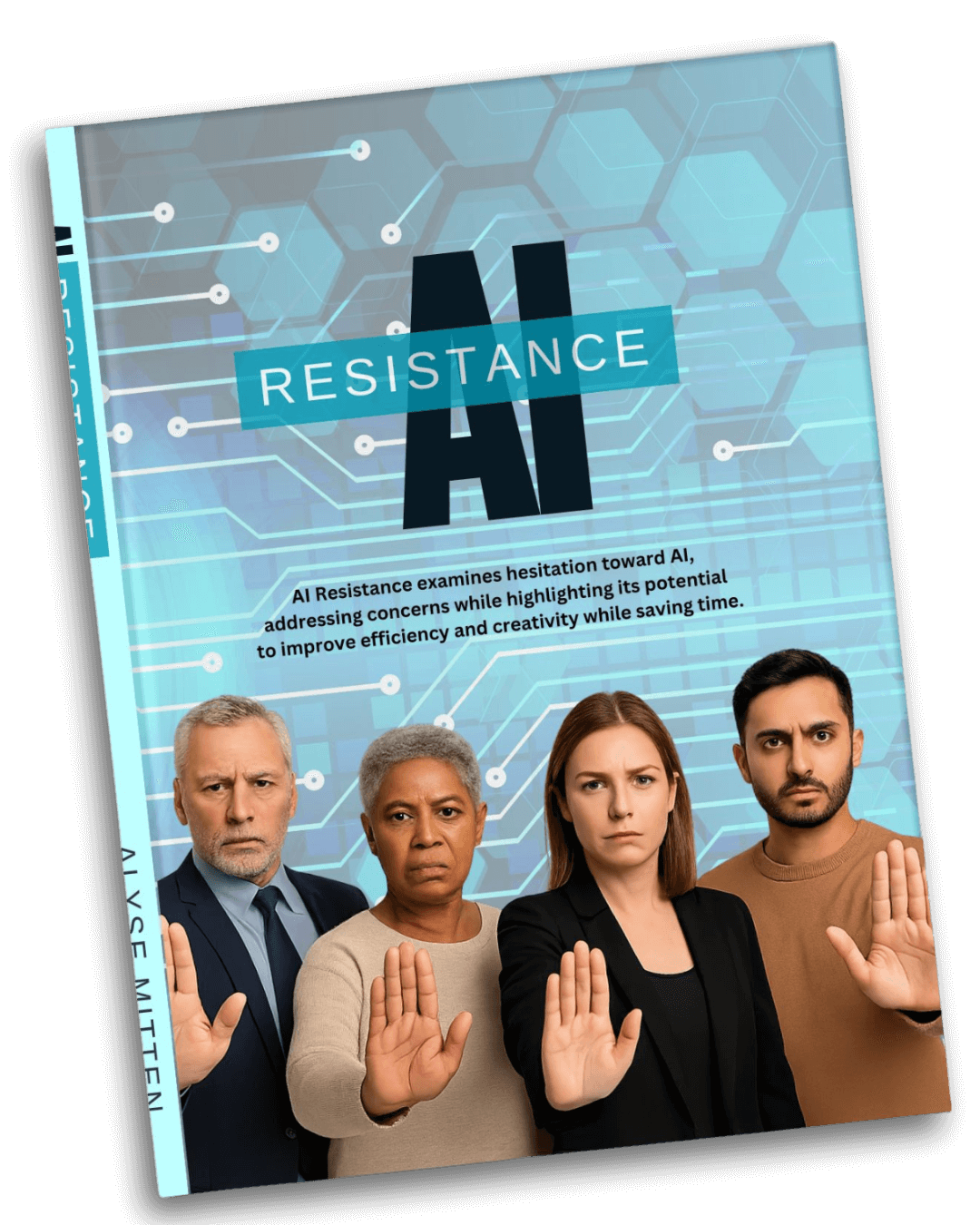
  • AI Resistance: What is AI? How can AI help me? Is AI worth the risk?

    AI Resistance: What is AI? How can AI help me? Is AI worth the risk?

    AI is the big, new thing in technology and it’s having an impact on all types of people. Businesses are moving to use AI in the workplace. Individuals are using it for everything from making cat images to aiding them in their own work. But is this a good thing? AI Resistance is about the ways AI can be used in daily life or the workplace, the risks that come from using AI, and practical ways of utilizing AI as a tool.

    AI is a Tool

    A key message in AI Resistance is that AI is only a tool, so it helps or harms depending on how the tool is used. Learn what to do and what to avoid when using AI, and you can start benefiting from it like the AI pros.

    Whether you are a cautious business owner or a skeptical individual, the book AI Resistance by Alyse Mitten is for you.

    [su_button url=”https://mybuild.iciconnect.com/ai-resistance-book/” target=”blank” style=”flat” background=”#AB175D” color=”#ffffff” size=”6″ center=”yes” radius=”5″ icon=”icon: shopping-cart”]Order Your Copy[/su_button]


    AI Resistance as described by Alyse:

    “This book is for the cautious, the curious, and the thoughtful.

    It’s for the leader who isn’t sure how to start — or whether they should start at all.

    It’s for the individual who sees change coming and wants to meet it on their own terms — with clarity, confidence, and integrity.

    Inside these pages, you won’t find hype. You’ll find honest conversations, practical strategies — and a gentle reminder: AI isn’t here to replace you.

    It’s here to help you do what you do best — even better.

    Maybe you picked up this book on your own. Or maybe someone already using AI gave it to you — because they realize it’s just a tool. Nothing more. Nothing less.

    Welcome to your next step. You don’t have to run. You don’t have to fear. You just have to stay open (just a little bit) — and begin.”


    Chapters include:

    1. The AIs We Trust
    2. AI—From Concept to Possibility
    3. Generative AI: The Wild, Wild West
    4. Moving Forward…Overcoming Misconceptions
    5. Junk In, Junk Out – The Reason for Lousy Results
    6. Real-Life Success Stories with AI
    7. Wrapping It All Up – Your AI Advantage
    8. Opening the Door to What’s Next

    [su_button url=”https://mybuild.iciconnect.com/ai-resistance-book/” target=”blank” style=”flat” background=”#AB175D” color=”#ffffff” size=”6″ center=”yes” radius=”5″ icon=”icon: shopping-cart”]Order Your Copy[/su_button]

  • Cloning Myself? Why am I Hesitant—and Why am I Still Exploring HeyGen Studios to convince myself?

    Cloning Myself? Why am I Hesitant—and Why am I Still Exploring HeyGen Studios to convince myself?

    By Alyse Mitten, Interlace Communications, Editor

    When our AI Trainer introduced this idea during my certification as an AI Consultant, I had thoughts then but only briefly. Well, today, I want to bring you into the conversation.

    You may or may not have heard of HeyGen Studios. They’re one of the leading platforms right now offering AI-generated video avatars—some that are avatars available to use and then avatars that look and sound like you, reading scripts you’ve written, and, to boot, in dozens of languages, with facial expressions, gestures, and even wardrobe changes. Pretty amazing, right?

    And yet… I’ve been hesitant.

    Not because I don’t see the value. In fact, that’s the very tension I’m sitting with. I do see the value. I just also see the questions. And that’s what this article is about.

    The Temptation to Clone Myself

    As an AI consultant, speaker, and business owner, I’m constantly creating—writing scripts, drafting blogs (like this one), recording videos, speaking at events. But there are only so many hours in the day. I often catch myself thinking, “If only I could be in two places at once.”

    That’s the exact promise of cloning yourself with a platform like HeyGen: record a short training or welcome video once, and let your AI self deliver the message whenever and wherever it’s needed. Want to scale your workshops? Send a personalized message to new leads? Offer multilingual content to reach new audiences? HeyGen makes it look easy and, frankly–having created videos with it, it is easy.

    I created a few videos using their default avatar options, and honestly? I didn’t mind it. The result was clean, professional, and got the message across without me needing to set up lights, do my hair, or re-record five takes.

    Imagine, the idea of cloning myself is incredibly appealing. I could take the material I’ve been pouring myself into—the content that lives in notebooks, slide decks, and half-drafted blog posts—and give it a voice and face, even on days I don’t have time to get camera-ready.

    The truth is, I’m no stranger to video creation. I enjoy the process. I’ve spent the last 3 years following influencers like Mark Harbert to learn how to help clients craft visual content that connects. So using HeyGen in a practical way just made sense—and it saves time.

    But here’s what is ok with me: using a generic avatar just feels very different from cloning myself. There’s a gap between “using an avatar” and “becoming the avatar.” That’s the line I’m hesitant to cross. Once it’s me—my face, my voice, my mannerisms—that’s no longer a stand-in, it’s my digital twin. And that comes with a deeper level of responsibility and care. I can’t shrug off a bad script or a mispronunciation. It’s not “the AI’s” mistake anymore. It’s mine.

    So even though I’ve dipped my toes into the water, cloning myself still feels like a bigger leap. One that I want to prepare for thoughtfully.


    Let’s look at the Pros and Cons of this.

    If you’re feeling the same hesitation, you’re not alone. Some of the most common struggles people have when considering avatar cloning include:

    1. Fear of Losing Human Touch
      There’s something powerful about showing up—flaws, pauses, and all. People connect with people. And the idea of handing that over to an avatar can feel… detached.
    2. Worry About Misuse
      Once your image and voice are cloned, how do you ensure it’s only being used the way you intended? What if someone else gains access to it—or edits it without your permission?
    3. Concern About Brand Integrity
      Your tone, phrasing, even facial expressions are part of your brand. A poorly rendered avatar could water that down, or worse, damage the trust you’ve built.
    4. Ethical or Spiritual Reservations
      For some, the thought of replicating their likeness feels unnatural or even unsettling. It raises bigger questions about identity and presence.

    These are all real concerns, and they shouldn’t be dismissed in the rush to adopt shiny new tech.


    Now, to the pros of cloning:

    That said, there’s a reason I’m still exploring this. Because the benefits are real—and in some cases, powerful.

    1. Reach More People, More Consistently
      Your AI avatar can deliver a consistent message, even when you’re unavailable. That’s a game-changer for client onboarding, course creation, and lead nurturing.
    2. Save Time and Energy
      Not every message needs a fresh recording. Sometimes you just need to say the same thing—well—over and over again. This is where automation shines.
    3. Expand Your Accessibility
      With multilingual and subtitled videos, you can open your message to broader, more diverse audiences.
    4. Stay Top of Mind
      You can maintain a presence on camera even during busy seasons—without compromising on quality or exhausting yourself.

    I don’t know about you, but there’s a bit more buy in by me.

    My Commitment Moving Forward

    I’ve decided that before I ever hit “clone,” I’m going to learn everything I can about HeyGen Studios—how it works, where it shines, and what to watch out for.

    I want to understand the creative controls, the security protocols, the export settings. I want to test what it feels like to write a script for myself versus writing for my avatar. I want to see how the AI handles pauses, warmth, humor. And then—and only then—will I decide how to move forward.

    Because in the end, this isn’t just about saving time. It’s about staying aligned—with my voice, my values, and my community.


    Wrapping It All Up

    Should you clone yourself? Maybe. Maybe not. But the more important question is this:

    What do you want your message to do—when you’re not in the room?

    That’s the question I’m sitting with. And as I explore this next chapter, I’ll be sharing what I learn—openly, honestly, and in my own voice (AI or otherwise).

    Let’s stay curious together.

    Curious about using HeyGen or other AI tools for your business? Let’s chat. I’d love to share what I’m learning and hear what you’re exploring too.


    Follow Us:

    [DISPLAY_ULTIMATE_SOCIAL_ICONS]

  • How Can You Optimize Your Blogs for Both SEO and AEO?

    How Can You Optimize Your Blogs for Both SEO and AEO?

    Whether you’re running a B2B or B2C company, are you wondering how to effectively optimize your content for both Search Engine Optimization (SEO) and the new Answer Engine Optimization (AEO)? The key lies in creating high-quality, targeted content that not only ranks well in search engines but also provides direct answers to user queries, particularly as AI-powered platforms become increasingly prevalent in our digital landscape.

    To optimize blogs for SEO and AEO, create high-quality, targeted content that answers user queries directly. Focus on keyword research, use structured headings, and aim for featured snippets. Additionally, prioritize conversational language for voice search, use schema markup, and update content regularly for relevance. By balancing SEO’s comprehensive approach with AEO’s focus on direct answers, your content can rank higher in search engines and AI-driven platforms alike.

    Understanding AEO: The Next Frontier in Digital Marketing

    Answer Engine Optimization (AEO) is about creating content that directly answers user queries, optimized for AI-powered platforms and voice assistants. It’s an evolution of SEO that focuses on providing immediate, concise answers to user questions.

    Now, let’s look into how you can create content that satisfies both SEO and AEO requirements for your business.

    First things first: What’s AEO?

    AEO stands for Answer Engine Optimization. It’s all about optimizing your content to provide direct answers to user queries, especially for AI-powered platforms and voice assistants. Think of it as SEO’s cooler, more direct little sibling.

    When I first heard about AEO in a recent podcast, my ears perked up. I’ve been curious with how to be found on AI platforms like Chat, Gemini, Claude, and Perplexity. I’m not treating this like another buzzword. No sir, this is going to be a game-changer in how we approach content creation. In fact, our latest blogs have all been created using the strategies provided for dual optimization.

    Now, you might be wondering, “Do I really need to worry about both SEO and AEO?” The short answer is: absolutely!

    Here’s why:

    SEO ensures your content ranks well in traditional search results, driving organic traffic to your site. AEO, on the other hand, helps your content appear in featured snippets, voice search results, and AI-generated answers. You do this right, and your blogs and website content is going to be a powerhouse duo that can skyrocket your online visibility.

    So, how do we create content that satisfies both SEO and AEO? Let’s break it down:

    1) First and foremost, Know Your Audience Avatar. 

    Do you know what makes your client/customer click? What are their pains and frustrations? What do they worry about that keeps them awake at night?
    What are their goals and desires? What are their dreams and aspirations?

    Don’t know these answers? Find out by running one of my favorite prompts to identify your avatar. 

    2) Start with Killer Keyword Research

    This is the foundation of both SEO and AEO. But don’t just focus on short, generic keywords. Look for long-tail keywords and, more importantly, questions your audience is asking. I always say, ‘Don’t guess what your audience wants to know – find out!’ Tools like AnswerThePublic are goldmines for question-based keywords. Just an FYI, a long-tail keyword is a phrase of 3 to 5 words specific to your business.

    3) Structure Your Content Smartly

    For SEO, use clear headings (H1, H2, H3) to organize your content. For AEO, structure your content to directly answer specific questions. A great trick is to use a question as your H2 and provide a concise answer immediately after. Be careful to never use more than one H1 on a page. More than one will adversely affect your ranking on Google.

    4) Optimize for Featured Snippets

    Featured snippets are the holy grail of AEO. To increase your chances of landing one:

    • Use clear, concise language
    • Provide direct answers to questions
    • Use bullet points or numbered lists where appropriate
    • Include relevant data and statistics

    5) Create In-Depth, Authoritative Content

    While AEO focuses on direct answers, don’t forget the depth that SEO requires. Expand on your topics to demonstrate expertise and authority. Remember my lunch and learn about E.E.A.T.? Remember, you’re not just answering a question—you’re becoming the go-to resource in your niche.

    6) Implement Schema Markup

    Schema markup is like a secret handshake with search engines. It helps them understand your content better, which is crucial for both SEO and AEO. See how the tools we use for SEO complement AEO, too.

    7) Focus on User Intent

    Understanding why people are searching for specific topics is key. Are they looking for information? Trying to make a purchase? Tailor your content to address these needs directly. It’s important to pay attention and ask questions. Be curious about your client’s needs.

    8) Optimize for Voice Search

    With the rise of voice assistants, optimizing for voice search is crucial for AEO. Use natural, conversational language and focus on answering questions clearly and concisely.

    9) Keep It Fresh

    Regularly update your content to ensure it remains relevant and accurate. This is important for both SEO rankings and AEO accuracy.

    10) Don’t Forget Technical SEO

    While we’re focusing on content, don’t neglect technical SEO aspects like page speed, mobile-friendliness, and secure connections (HTTPS). These factors affect both SEO rankings and AEO performance.

    11) Create Multi-Format Content

    Don’t limit yourself to text. Incorporate images, videos, and infographics. This not only enhances the user experience but also increases your chances of appearing in various search features.

    By implementing these strategies, you’ll create content that’s optimized for both traditional search engines and emerging answer engines. It’s a win-win!

    Remember, the key is to strike a balance. You want to provide quick, direct answers for AEO while still offering comprehensive, valuable content for SEO. It might seem tricky at first, but with practice, it’ll become second nature.

    “The future of content creation isn’t about choosing between SEO and AEO – it’s about mastering both.”

    To help you get started, here’s a handy checklist for creating SEO and AEO-friendly content:

    • Run the prompt to identify your ideal avatar
    • Conduct thorough keyword research, including question-based queries
    • Structure your content with clear headings and subheadings
    • Include a concise answer to the main question early in your content
    • Optimize for featured snippets with clear, direct answers
    • Expand on topics to provide in-depth, authoritative information
    • Implement relevant schema markup
    • Use natural, conversational language
    • Incorporate long-tail keywords throughout your content
    • Create multi-format content (text, images, videos, infographics)
    • Optimize for voice search with conversational phrases
    • Ensure your content is mobile-friendly and loads quickly
    • Include relevant internal and external links
    • Regularly review and update your content for accuracy and relevance

    There you have it – your guide to creating content that shines in both SEO and AEO. Remember, it’s not about perfection, it’s about progress. Start implementing these strategies today, and you’ll be amazed at the results.

    Wondering what other questions you could ask about AEO or SEO?

    Try one of these:

    What are the best practices for creating SEO-friendly content?
    How can I ensure my blog posts rank higher in search engine results?
    What tools can help me optimize my blog for AEO?
    How do I measure the success of my SEO and AEO efforts?
    What are some examples of successful SEO and AEO strategies?

    Happy optimizing, folks!


    Follow Us:

    Listen to the conversation between two bots about the topic. They have some very interesting comments.

    Source: NotebookLM